A self-paced course for couples · From More Than Love
The fight isn't the problem. What happens after it is.
Every couple ruptures. Almost nobody was taught how to come back. The HEART Method is a self-paced course that teaches you exactly what to do when it goes sideways — how to calm the body, find the real need, and return to each other knowing each other better than before.
$199 one payment
Self-paced • Watch together at home • Lifetime access
Built on couples research and nervous system science — and on the five moves we had to learn the hard way in our own marriage.
- What this is
- A self-paced course that teaches couples a five-step method for moving through conflict — and coming back closer.
- What’s inside
- 3 video modules + a bonus video · workbook with the body-based regulation practices · printable scripts
- Who it’s for
- Couples who love each other and keep having the same fight.
- Price
- $199 · one payment · lifetime access
Who's teaching this
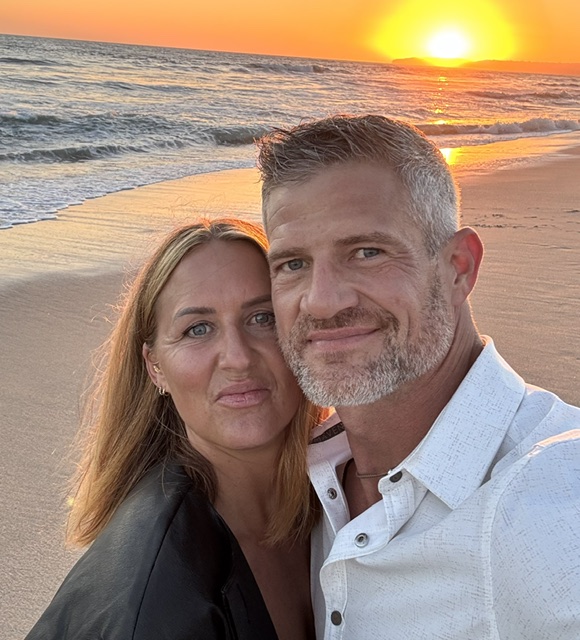
We're Brandon and Darci.
We spent years having the same fight in different clothes — one of us pushing to be heard, one of us going quiet to make it stop.
The HEART Method is what we built to get out of it. We're not handing you a theory.
The fight you keep having
You know how this one goes.
It starts over something small. The tone. The thing you said in front of his mother. Who was supposed to handle the appointment.
And within four minutes you are somewhere else entirely — somewhere you have both been a hundred times before. You know your lines. You know hers. You can feel the whole thing happening and you cannot stop it.
One of you gets louder, trying to be understood. One of you goes flat, trying to make it stop.
Then it ends, the way it always ends. Somebody apologizes to get the evening back. Or nobody does, and it just goes quiet. You eat dinner. You watch something. You go to bed with your backs to each other and you both lie there awake.
And nothing got repaired. It just got filed away.
That's the part nobody tells you about. It isn't the fight that does the damage. It's the pile.
You don't drift apart in one terrible night. You drift one unfinished argument at a time, until you're two people who are perfectly polite and can't quite reach each other anymore.
You still love each other. That was never the problem.
You just never learned what to do in that moment — and neither of you was ever going to figure it out while you were in it.
Nobody ever taught us this
Where exactly were you supposed to have learned this?
Think about it honestly. Who taught you how to move through a rupture?
Not your parents — most of us watched silence, or shouting, or one person leaving the room. Not school. Not church. Not the movies, where the fight ends with a grand gesture and a swell of music and nobody ever shows you the Tuesday afterward.
You were handed the hardest relationship of your life and no instructions for the part that decides whether it lasts.
So you improvised — with whatever kept you safe as a kid. Go quiet. Get reasonable. Get louder. Fix it fast. Those strategies worked once. They are not working now, and you are both still running them.
Here is what changed everything for us.
Rupture is not the opposite of intimacy. It's where intimacy gets made.
Think about where you actually learn something true about your partner. It's not over dinner. It's the moment they get hurt and tell you why — when you find out what was really underneath the thing they snapped about, and it wasn't the dishes, it was that they've felt invisible here for a long time.
That moment is available every time you rupture. Most couples miss it — too busy defending, too flooded to speak, too eager to get back to normal.
The couples who thrive are not the ones who fight less. They are the ones who come out the other side of a fight knowing each other better than they did going in.
That's a skill. It can be taught. That's the entire course.
Love doesn't deepen in the easy moments. It deepens in the ones you learn to come back from.
Introducing the HEART Method
Five moves. In order. Every time.
The HEART Method is what we built after years of having the same fight and getting nowhere by talking about it harder.
Because that's the thing most couples get wrong — and most advice gets wrong too. You cannot fix this at the level of the conversation. When you're flooded, the thinking part of your brain is offline. It takes about twenty minutes to come back after the last spike. Everything either of you says in that window is coming from a body in threat, not from the person you married.
So HEART starts where it actually has to start. In the body. Then it moves, step by step, to the thing underneath.
H — Halt & Regulate
Stop the escalation and calm your body first. You’ll learn why flooding takes about twenty minutes to clear, exactly how a Halt is different from stonewalling, and the physiological sigh — a breath you can do in thirty seconds that brings your body down.
E — Expand the Heart
Before you speak, consciously choose the team lens. This is the move that decides whether your hurt gets handled by your best self or your most defended one.
A — Assess the Story
Separate fact from philosophy. Name what actually happened — and hold your interpretation as a question instead of firing it as an accusation.
R — Recognize the Need
Get underneath the defensive reaction to the honest need below it. To feel safe. To matter. To be trusted. This is usually the moment couples cry, because it’s the first time it’s been said out loud.
T — Turn Toward
Come back on purpose, with a vulnerable share and a clear, doable request. Not a general plea. Something your partner can actually do.
This is not about never rupturing again. It's about never staying stuck in rupture again.
Because it works in the right order. Most couples try to resolve the content while both bodies are still in threat, and then conclude they're incompatible. HEART regulates first, chooses the lens second, and only then goes looking for what's true. By the time you get to the need underneath, you're two people solving something together instead of two people defending themselves. Grounded in couples research and nervous system science — and tested in our own marriage, on nights we are not especially proud of.
What you get
Couples coaching, from your own living room, at your own pace.
No waiting list. No weekly appointment you have to drive to and dress for. No sitting on a stranger's sofa explaining your marriage from the beginning.
You get the work, in your house, on the nights that suit you — and you keep it forever.
Three video modules, plus a bonus video
The method taught the way we had to learn it. Watch together on the couch.
A demonstration of each move
You see it happen, so you know what it sounds like before you try it at 10pm on a Tuesday.
The HEART Workbook
Your own copy each. Solo pages first, then the shared ones. The regulation practices live here too.
Regulation practices
Short body practices, including the physiological sigh, so Halt is something you can do — not just understand. These are not on video — you’ll find them in the workbook.
The Pause Agreement
Written together while things are calm, so you both know what happens next time one of you needs to stop.
The HEART one-pager
The whole method, printable. For the moment you need it and can’t remember a thing.
Repair conversation scripts
Word-for-word openers for the hardest part — starting. Including what to say when your partner is the flooded one.
Lifetime access
Every update included. Couples come back to this for years.
Self-paced. Most couples give each move a week or two so it has time to land in the body — but it's yours forever, so you set the speed.
What changes
What's different on the other side of this
You’ll know what to do.
That’s the first thing couples tell us. The panic goes out of it. Something starts to go wrong and instead of bracing, one of you says let’s Halt — and you both know exactly what happens next.
You’ll stop having the same fight.
Not because you agreed on the dishes, but because you finally got underneath to what it was actually about. That one doesn’t come back the same way.
You’ll fight shorter.
Three days of cold silence becomes forty minutes and a real conversation. Couples notice this one within weeks.
You’ll stop being afraid of conflict.
When you trust the way back, disagreement stops feeling like a threat to the marriage. You can say the harder thing, because you know it isn’t going to cost you the week.
You’ll learn things about each other you didn’t know.
Things you’ve been married for years and never heard. This is the part nobody expects — that the fights become where you find each other.
And intimacy comes back.
Not as a technique. It comes back because you’re being honest again, and because being truly known by someone is the thing that makes you want them.
Who it's for
This is for you if
- You love each other and you keep ending up in the same place
- Conflict in your house means volume, or it means silence, and neither one ends anything
- You want the help without the waiting list, the commute, or telling your story to a stranger
- One of you shuts down and the other chases, and you’re both exhausted by it
- Things are mostly fine — and you can feel the distance building anyway
This probably isn't for you if
- There is abuse in your relationship. Please get real-time support — this course is not the right tool and we’d rather say so.
- You are in the acute aftermath of betrayal. Start with a therapist and come back to this later.
- You want your partner fixed. This only works if you’re both willing to look at your own half.
Why we teach this
We teach this because it worked on us.
Years of the same fight, both of us lying awake afterward wondering how two people who love each other could keep doing this. The five moves are what got us out, learned the slow way.
Nobody should have to spend a decade working out what should have been taught to all of us at the start.
The HEART Method
Three video modules + a bonus video · The HEART Workbook · Regulation practices (in the workbook) · The Pause Agreement · Repair scripts · The printable one-pager · Lifetime access
$199
One payment. Yours forever.
Get instant accessQuestions
The questions you're already asking
Does my partner have to do it with me?
It’s better together — but one person changing how they handle rupture genuinely changes what happens in the room. Plenty of couples start with one willing partner.
How does it work?
It’s self-paced: three video modules, a bonus video, and the HEART Workbook. Go at whatever speed suits the two of you — it’s yours for life.
Are the regulation practices on video?
No. The regulation tools, including the physiological sigh, are not on video — they’re in the HEART Workbook, so you can find them quickly when you need them.
We’ve already done therapy. How is this different?
Most talk-based work happens at the level of the conversation. This works at the level of the body first, because that’s where the fight actually starts — and it gives you a sequence to run in the moment, not an insight to remember.
What if we’re already in a bad place?
Then you’re the couples this was built for. The method doesn’t need you to be calm or connected before you start. It starts with a flooded body on purpose.
Is this religious? Is this therapy?
It’s neither. It’s a skills course built on couples research and nervous system science. It isn’t a substitute for therapy, and we say so clearly inside.
You're going to have another rupture. Maybe this week.
The only question is whether it costs you three days and a little more distance — or whether it turns into the conversation where you finally understand something about each other you've been missing for years.
You were never taught how to do this. You can learn it now.
Self-paced • Lifetime access